2025
NET-ZERO-NEXT-GEN

NSW ASSEMBLY

Tuesday
18 November 2025

Charles Perkins Centre Auditorium
University of Sydney, Australia

Category: Speakers

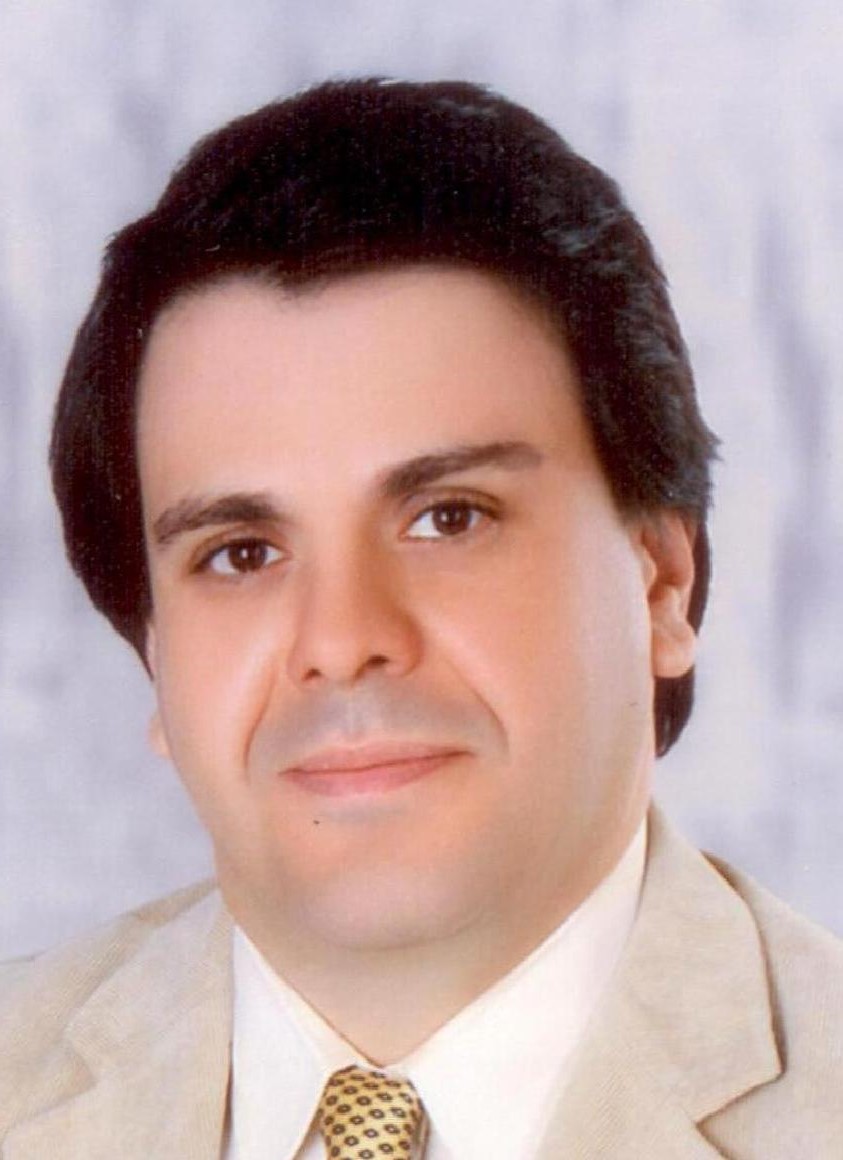
  • Dr Reza Kahlaee

    Dr Reza Kahlaee

    Dr Reza Kahlaee is a Senior Clinical Research Officer at the Children’s Hospital at Westmead and a Conjoint Senior Lecturer at the University of Sydney’s Faculty of Medicine and Health. With a PhD in Pharmacy (Biomedical Engineering) and a background in AI and Robotics, he bridges clinical research, data analytics, and sustainability innovation in healthcare.

    His work focuses on reducing anaesthetic gas emissions and CO₂e in operating theatres, developing data-driven frameworks to support NSW Health’s Net Zero and Sustainable Futures initiatives. Through advanced analytics and AI integration, Dr Kahlaee leads projects that measure and mitigate the environmental footprint of clinical care while enhancing patient safety and operational efficiency. His research exemplifies how decarbonisation and digital health innovation can work together to build healthier, low-carbon healthcare systems.
  • Dr William McLeod

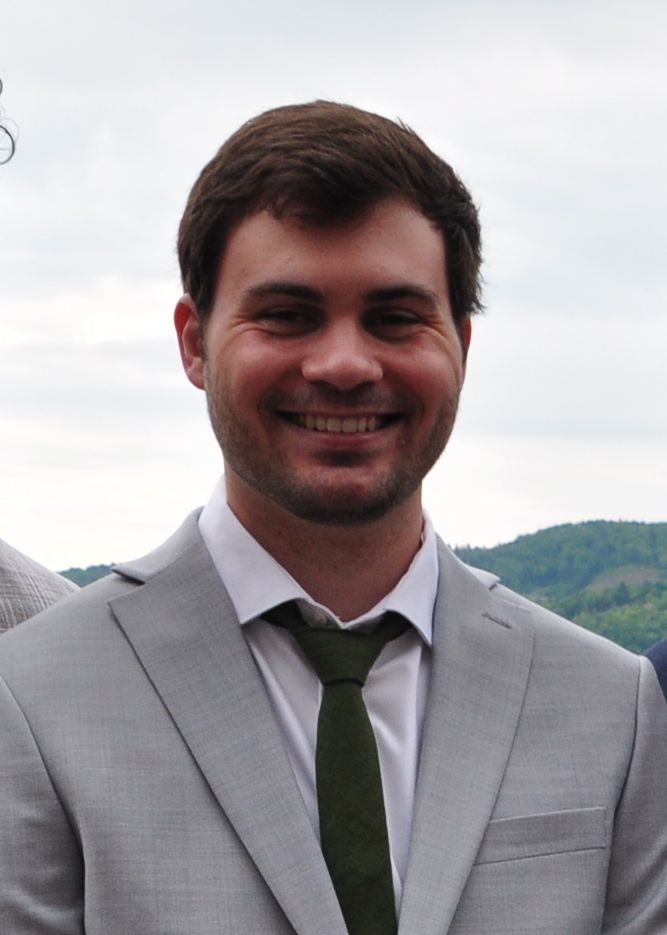
    Dr William McLeod

    William completed his PhD earlier this year at Washington State University in the US on the use of permanent magnets for practical improvements to low-cost, sustainable energy storage technologies. Now, he’s a member of the Jiang research group at the University of Sydney investigating how magnetism can influence electrochemical synthesis at high and low voltage.

  • Dr Mengyu Li

    Dr Mengyu Li

    Dr Mengyu Li is a Horizon Fellow, ARC DECRA Fellow, Senior Lecturer at Integrated Sustainability Analysis, the School of Physics, the University of Sydney. Mengyu has an interdisciplinary background in engineering and sustainability. Mengyu’s research focuses on quantitative sustainability assessment of the interactions of societies and economies with ecosystems and resources at local, national, and global scales. Mengyu develops and applies concepts and research involving interdisciplinary perspectives from economics, engineering, mathematics, environmental and social science with the ultimate aim to assure both human and planetary well-being. Mengyu devises methodologies and conducts nationally and internationally significant research into low-carbon energy production, environmental and social footprints of consumption, future environmental and resource scenarios, and the impacts on production and consumption systems of potential future disasters. 

  • Dr Christopher Barnett

    Dr Christopher Barnett

    Dr. Barnett is an organometallic chemist by training, and his research spans catalysis and electrocatalysis, with a particular focus on N-Heterocyclic Carbenes and their electronic properties. He is currently part of the Laboratory of Advanced Catalysis for Sustainability, working with Professor Thomas Maschmeyer, where he explores reactor design and high-throughput catalyst screening using additive manufacturing and rapid prototyping

  • Dr Ziguang Zhao

    Dr Ziguang Zhao

    Dr Ziguang Zhao is a Research Associate in the SCoPE Lab, School of Chemical Engineering, University of New South Wales. He develops numerical models for process design and optimization, with a focus on low‑carbon metallurgical technologies. His work covers innovative operations in blast‑furnace ironmaking, flash ironmaking, and electron‑beam cold‑hearth melting, aiming to improve efficiency and reduce emissions across iron and steelmaking.

  • Dr Peter Kovalsky

    Dr Peter Kovalsky

    Dr Peter Kovalsky is a Senior Lecturer in environmental engineer at University of Waikato specialising in sustainable water treatment technologies, renewable energy integration, and resource recovery from agricultural waste. Peter has spent more than half his career in industry after completing his PhD at UNSW in 2008 in Chemical Engineering. His research now focuses on developing and evaluating innovative solutions for desalination, particularly Capacitive Deionization (CDI), and integrating these with renewable energy sources like photovoltaics for agricultural applications.

  • Dr Charlotte Zhu

    Dr Charlotte Zhu

    Dr Charlotte Zhu is a postdoctoral research associate in Particle and Catalysis Research Laboratory at the School of Chemical Engineering, UNSW.  Charlotte’s research is dedicated to the development of catalysts that harness sunlight as a major energy source for the efficient reduction of CO₂ into high-value, fuel-type products. Her work explores photothermal and light-assisted thermal pathways, aiming to advance sustainable energy conversion technologies for carbon circularity.  Central to her research is the investigation of the optical and physical properties of catalytic materials to better understand surface-reactant interactions. She also focuses on elucidating the role of light in influencing reaction mechanisms, providing insights that bridge fundamental science and practical application in solar-driven CO₂ utilisation. 

  • Dr Ali Hadigheh 

    Dr Ali Hadigheh 

    Dr Hadigheh is a Senior Lecturer and Associate Head of School (Research Education) in the School of Civil Engineering. He is leading the Smart Materials and Sustainable Structures (SMS2) group, which focuses on multidisciplinary themes aimed at developing and implementing innovative materials and systems for sustainable, durable, and resource-efficient infrastructure. He is also the Circular Economy Pillar Lead at the Net Zero Institute (NZI). Ali has been the Lead Investigator on several research grants including an Australian Research Council (ARC) Discovery Early Career Research Award (DECRA) in 2020. Ali’s research contributes to our understanding of how sustainable, resilient and green engineering materials function in structural applications. His research expertise lies in recycling and upcycling composite wastes and industrial by-products, material and performance-based characterisation, smart sensors for structural health monitoring, and additive manufacturing of multifunctional materials via experimental, advanced computational modelling, and machine learning techniques. 

  • Dr Shuying Wu

    Dr Shuying Wu

    Dr. Shuying Wu is currently a Senior Lecturer and ARC Future Fellow Awardee at the School of Aerospace, Mechanical and Mechatronic Engineering (AMME), The University of Sydney. Before joining AMME in September 2023, she was a Senior Lecturer at School of Engineering, Macquarie University since 2018 (ARC DECRA Fellow Oct 2018-Oct 2020), ARC DECRA Fellow at School of Mechanical and Manufacturing Engineering, UNSW (2017-2018), Research Fellow at School of Engineering, RMIT University (2014-2017) and Deakin University (2013-2014).  Her research is dedicated to advancing innovative, eco-friendly polymer nanocomposites for the fabrication of sensors and composite structures. 

  • Dr Omid Ghasemi

    Dr Omid Ghasemi

    Dr Omid Ghasemi is a Postdoctoral Researcher at the University of New South Wales (UNSW) Institute for Climate Risk & Response. His research examines how people form judgments and make decisions about climate change, focusing on risk perception, emotions, trust, and policy communication. He studies public trust in scientists, the influence of ideology on climate attitudes, the effects of extreme weather on climate action and emotional responses, and the relationship between individual and systemic responses to climate challenges. His work draws on large-scale cross-national surveys, longitudinal panel studies, and behavioural experiments to uncover the psychological barriers and drivers that shape meaningful climate action.